Thursday, 8 June 2017

Animation Review


Animation Review:

                                                                      *NOTICE*
...All of the opinions were given me by the viewers via comments on the video or by the questionnaire that I gave them to write their opinion on the video...The one below is an example of the questionnaires that I gave out.

The animation worked well on its own, everything was in the correct order and timed in my opinion very well.

The images and music worked with each other well and had no problems like sudden graphical loss for example it was 360p then suddenly turned 240p.

Good:
The audience likes the animation; the music was appropriate and it a good variety of shots.

The animation was said by one of the viewers to be aimed at 16-24 year olds which is actually what I was aiming at.

Bad:
The animation however has been said to not have enough or any camera angles at all, which could be improved if we have an actual character that you follow but it would mean ripping the animation from its roots.

There was also a comment about the background of the college being uneven and flat, which can also be fixed if identified.

Improvement:

There are plenty of places where improvements can be made. For example, the doors at 1:08 and 1:29 can be animated to open and close at certain moments.

The little arrow head at 0:52 can be animate to look like its moving towards the entrance.

The staff member at 1:14 can also be animated to move a bit like waving his or hers arm, leg or head.

I would be able to do so if I had edited the background a bit more.

Reason for such an animation:
The reason was that I wanted the viewer to feel like they are the ones who are the one applying for the college course, I also did it like this because the background of the animation would be hard to replicate and would take time, as well as the staff member uniforms would also need to be replicated.

Thursday, 18 May 2017

Update 3 for animation

I have finished editing the advert in Photoshop and now have moved it to Final Cut Pro to be finalised and to add some more official things like a beggining and end credits.


The image above currently shows my progress and its currently almost finished and performs rather well in my opinion and has no specific faults.
I have made some cuts as seen in the screenshot to some of the scenes since they were too long in my oppinion so I cut some parts down.

NOTE: Dont add fade outs in photoshop if your going to add them later in final cut or other program, really makes things dificult.

Update 2 for animation

I have currently began the editing process and it is currently in a bit of a alpha stage by what I can describe and its still far from completion.


The first thing I did is arrange all the images and text bubles so that they are in their correct possitions and dont overlap eachother which would cause big problems for me later. I also added a bit of a fade out using the white background that I made using a rectangle tool.

Thursday, 11 May 2017

Progress update for animation

I have currently started working on another scene, at the moment it looks like this:


its fairly in good condition and with a few more refinemtents it will look great and can be soon used in the animation.

Thursday, 20 April 2017

Planing of TOWH


Animation:

1.  By week 5 I will need at least half of the backgrounds done or animated so that on week 6 I will be able to start finalizing it.
2.  The animation will be made make you feel as if your the character in the animation, this is to make the audience feel as if its actually them.

Imagine something like this image up top, a first person prospective.

The animation will be more time consuming on its backgrounds so it’s going to be mostly making the backgrounds as accurate as possible and describable.

Most of the dialogue will be like pop-ups.
The character design won’t be as important since its you who is the character.

The rest such as staff or surroundings will be made as accurate as possible to the real thing.

By week 5 I will need at least half of the backgrounds done or animated so that on week 6 I will be able to start finalizing it.

All or most of its work will be done in Photoshop and Final Cut Pro, any music will be borrowed from YouTube.
3.  The budget should not be too big something like £100 since I am only going to be using computers and the budget may be used in case something else is needed.
4.  We won’t need any personal requirements since this is a one-man job.
5.  A computer like a IMac is need with the Photoshop and Final Cut Pro software.
6.  Contingencies will be simple; a couple of flash cards in case the files get corrupted.
7.  Health and safety isn’t really needed as the person will be working on a computer, maybe a fire extinguisher just in case it gets on fire.

The music and U WOT M8 animation are all free to use:


TOWH represantation

Working Title
Representation of TOWH
Format
VIDEO
Type of animation
DRAWN/SKETCH
Purpose (describe in detail)
To show what TOWH has to offer
Target audience
(describe in detail)

Teenagers or future students.
Animation software
Adobe Photoshop and Final Cut Pro
Total running time
(15 seconds +)
30+ seconds
Dimensions
1280x720 Hi-Def
Planned approach
Male all of the backgrounds, then proceed to make the charecter(ers). 
Make all of the dialogue work in perfect order and without glitches.
Proposed action/storyline
Your at your house and you sport a leaflet from TOWH college, you take interest and decide to attend one ofthe open days to see if there is anything you like. You take interest and join the college, it then fades to the fraze "Tower Hamlets college... The one place for you..."

Thursday, 16 March 2017

Introduction to animation 3


Television Era of animation....
The television era of animation started to develop at the end of the first half of the 20th century. Cartoons were largely seen as children’s entertainment and that continued through the first phases of the Television era.

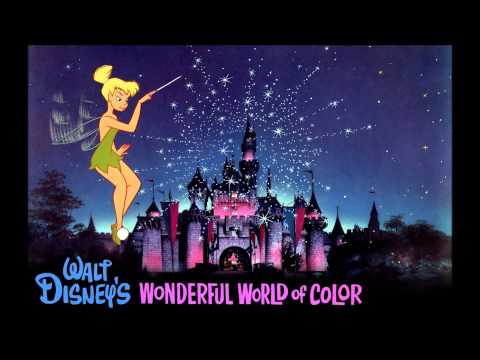
Gradually, TV was becoming more and more popular and drew audiences away from movie theaters as children’s TV shows began including airings of cartoons in their respective schedules. One of the first animations shown on television was Felix the Cat. There were also early experiments in limited animation television cartoons as the animations were tested for appeal in the TV audience. These cartoons were usually about 5 minutes long and often episodic in nature. Crusader Rabbit, created by Alexander Anderson and Jay Ward, was one of the first cartoons produced specifically for TV. Other shows from that period include Colonel Bleep, Gumby – the first clay animated cartoon, The Adventures of Paddy the Pelican, Bucky and Pepito and Tom Terrific. In 1954, Walt Disney decided to give the television medium a try with his own TV weekly animated series Disneyland in order to popularize his new Disneyland theme park and continued with a decades-long series of TV broadcasts of Disney cartoons, which later expanded into the show Walt Disney's Wonderful World of Color.
Image result for Walt Disney's Wonderful World of Color.
Wolrd of Colour


Hanna-Barbera Productions was the first major animation studio to produce animations expressly for television. At the beginning it found an audience in the evening “family hour” time. Their first animated series were The Ruff and Reddy Show and the first-run syndicated The Huckleberry Hound Show but the first show they became famous for was the half-hour animated prime time sitcom The Flintstones. Other famous prime time cartoons from the studio are The Jetsons, Top Cat and Jonny Quest. They later turned their endeavors towards making Sunday morning cartoons like Scooby-Doo, Where Are You! as that market was prospering.

One of the main problems of animation at the time was the amount of labor it required in order to be produced while network televisions needed more episodes meaning faster production. In order for that to be achieved studios had to apply limited animation techniques. Studios that used limited animation techniques include UPA, Jay Ward, Cambria and Hanna-Barbera. The Filmation studio, on the other hand, relied on heavy use of stock footage, rotoscoping and limited voice casts to avoid limited animation and stay financially capable.

By the 1960s, the idea that cartoons were mostly for children had nestled itself deep into people’s minds, however, in actuality this was not always the case as some controversial attempts were made on animation projects that were definitely not for children. At the time Disney generated some considerable revenue with films like One Hundred and One Dalmatians, the live-action/animated combo Marry Poppins and The Jungle Book.  Later, in 1966, the studio brought A.A. Milne's Winnie-the-Pooh characters to the screen in two of four animated featurettes (the second of which, Winnie the Pooh and the Blustery Day, won an Oscar, the last Walt Disney received). Since Walt Disney died at the end of the same year the studio faced a harsh period as some other veteran animators either died or retired which meant they had to be replaced. In 1973, Eric Larson started a program in order to train new animators. After that the studio’s films feature The Aristocrats, Robin Hood, The Fox and the Hound, the featurettes It's Tough to Be a Bird, Winnie the Pooh and Tigger Too!, The Small One and others.

In addition, in 1963 Warner Bros. animation studio was shut down and attempts to revive it with new characters between 1967 and 1969 were futile as everyone remembered and loved the old characters from the Golden Age of animation. After the studio was closed an animator by the name Friz Freleng and his new partner David H. DePatie went on to produce the Pink Panther cartoons during the 1960s and 1970s which were released both on TV and in movie theaters. In 1981, Friz Freleng retired and the DePatie-Freleng Enterprises studio was sold to Marvel Comics.

Another important person of the time – Chuck Jones - teamed up with Les Goldman to create Sib Tower 12 Productions and work with MGM on the Tom and Jerry series on the mid-1960s. He also produced a number of successful animated TV specials like How the Grinch Stole Christmas!. He also produced a live-action/animated film called The Phantom Tollbooth.

In 1968 the music of The Beetles and the artwork of animator George Dunning was combined in the animated film The Yellow Submarine. Also around that time, in 1969, Ralph Bakshi founded Bakshi Productions which aimed to create cartoons different from those in the mainstream animation. A division was founded called Ralph’s Spot which produced animations for commercials like Coca-Cola. He also developed Heavy Traffic – an animated drama film about inner-city street life. Another experimental adult cartoon film was Fritz the Cat which was the first X rated animated film. Since that, a few other attempts were made at independent feature-length animated films in the 1970 like Watership Dawn, Heavy Metal and others. There were also short animated films like The Critic, Bambi meets Godzilla and Lupo the Butcher which were experimental in nature and in some cases aimed at adult audiences. However, the industry at large still continued to dismiss animation as kids’ entertainment.

During the 1980s, Saturday morning cartoons continued to be dominant though other studios chipped away from H-B’s prevalence with shows like Alvin and the Chipmunks, Garfield and Friends, The Real Ghostbusters and others. There were also attempts to adapt prime time series to animation format such as ALF: The Animated Series, It’s Punky Brewster and others. Another peculiarity of the 1980s was the considerable amount of cartoons based on children’s toys which include Teenage Mutant Ninja Turtles, G.I. Joe: A Real American Hero, The Transformers, He-Man and others. Another influence in animation was the importation of some Japanese animation in America like Voltron, Star Blazers, Robotech and others. While these adaptations for American audiences had limited effect on the general industry, they still gained a cult following with their complex storylines and more realistic depiction of violence.
 
More info on this topic is avaliable on:
 http://nikolayslavovcgmaprogress.weebly.com/main-blog/history-of-the-television-era-of-animation

Introduction to animation 2

Image result for flip bookJohn Barnes Linnett patented the first flip book in 1868 as the kineograph. A flip book is a small book with relatively springy pages, each having one in a series of animation images located near its unbound edge. The user bends all of the pages back, normally with the thumb, then by a gradual motion of the hand allows them to spring free one at a time. As with the phenakistoscope, zoetrope and praxinoscope, the illusion of motion is created by the apparent sudden replacement of each image by the next in the series, but unlike those other inventions no view-interrupting shutter or assembly of mirrors is required and no viewing device other than the user's hand is absolutely necessary. Early film animators cited flip books as their inspiration more often than the earlier devices, which did not reach as wide an audience.


THE SILENT ERA......


Charles-Émile Reynaud's Théâtre Optique is the earliest known example of projected animation. It predates even photographic motion picture devices such as Thomas Edison's 1893 invention, the kinetoscope, and the Lumière brother's 1894 invention, the cinematograph. Reynaud exhibited three of his animations on October 28, 1892 at Musée Grévin in Paris, France. The only surviving example of these three is Pauvre Pierrot, which was 500 frames long.

File:Emile Cohl - Fantasmagorie 1908 - YouTube.theora.ogv
Émile Cohl's Fantasmagorie

After the cinematograph popularized the motion picture, producers began to explore the endless possibilities of animation in greater depth. A short stop-motion animation was produced in 1897 by  Albert E. Smithand J. Stuart Blackton called The Humpty Dumpty Circus. Stop Motion is a technique in which real objects are moved around in the time between their images being recorded, so that when the images are viewed at a normal frame rate the objects appear to move by some invisible force. It directly descends from various early trick film techniques that created the illusion of impossible actions.
A few other films that featured stop motion technique were released afterward, but the first to receive wide scale appreciation was Blackton's The Haunted Hotel, which baffled viewers and inspired much further development. In 1906, Blackton also made the first drawn work of animation on standard film, Humorous Phases of Funny Faces. It features faces that are drawn on a chalkboard and then suddenly move autonomously.
Fantasmagorie, by the French director Émile Cohl  (also called Émile Courtet), is also noteworthy. It was screened for the first time on August 17, 1908 at Théâtre du Gymnase in Paris. Cohl later went to Fort Lee, New Jerseynear New York City in 1912, where he worked for French studio Éclair and spread its animation technique to the US.

There is also a massive number of genres for animation:

  • Absurdist/surreal/whimsical.
  • Action.
  • Adventure.
  • Comedy.
  • Crime.
  • Drama.
  • Fantasy.
  • Historical.
The list goes on with the ammount of genres being a total of 24.

For more info on these topics please go to:
https://en.wikipedia.org/wiki/List_of_genres
https://en.wikipedia.org/wiki/History_of_animation#The_silent_era

USAGE OF ANIMATION IN  MEDIA SECTORS......

Animation is used in many sectors such as advertisement, movies and TV.
For example the advertisement for a car on TV, or a Disney movie your watching in the cinema are all parts of it being used in media sectors.

Here is a detailed table with examples:

ADVERTISING:
Adverts need to be attention grabbing, memorable and appealing, and animation is well suited to achieve this. Therefore, much of the work undertaken by the animation industry is in creating adverts that promote products or services for client companies. Although some animators are employed in-house by advertising agencies, experienced animators often work freelance, being contracted to work as and when required. Animated banners and sequences are commonplace on the internet, not only as adverts but also as a regular feature of website design.

ENTERTAINMENT:
Television carries an increasing number of animated programmes. For children, animation may be used for entertainment or to get an educational message across, while animated shows and short films aimed at older people may have dramatic, comedy or satirical themes.
Lately, with new digital technology, it has become easier to produce animate feature-length Films and DVDs/videos, and such films even have their own category at the Oscars!
One of the fastest-growing areas for animators is the field of commercial music video production. Videos can be completely animated or moving images can be used incorporating cartoon animation mixed with straight video footage of the band or artist.

TECHNIQUES USED IN ANIMATION....

 Traditional animation involved animators drawing by hand for each and every frame. If you love the feel of pencils on a paper, then the traditional approach is very fascinating. Traditional animation is creating the drawings one by one on the frame. 2D animation involves creating numerous drawings then feeding into a plastic cells, hand painting them and create the animated sequence on a painted background image. This can be seen in early disney movies like Snow White and the Seven Dwarfs, Peter Pan, and Sleeping Beauty, Aladdin.    

 Audio-Animatronics and Autonomatronics:
 Walt disneyimagineering created the trademark audio animatronics which is fitted in its disney theme parks. Otto is a robot which can easily sense a person in a room, converse with them and can also tell if they are happy. Autonomatronics technology is different from Audio-Animatronics technology. Audio-Animatronics technology repeats a pre-programmed show over and over again. Autonomatronics technology is driven by sophisticated cameras and sensors giving Otto the ability to make choices about what to say and do.

ROTOSCOPING: 
Rotoscoping an animation technique used by animators to trace over motion picture footage, frame by frame, when realistic action is required. Originally, photographed live-action movie images were projected onto a glass panel and re-drawn by an animator. This projection equipment is referred to as a rotoscope.
Although this device was eventually replaced by computers, the process is still referred to as rotoscoping. In the visual effects industry, the term rotoscoping refers to the technique of manually creating a matte for an element on a live-action plate so it may be composited over another background. Rotoscoping has also been used to allow a special visual effect (such as a glow, for example) to be guided by the matte or rotoscoped line. One classic use of traditional rotoscoping was in the original three Star Wars movies, where it was used to create the glowing lightsaber effect, by creating a matte based on sticks held by the actors. To achieve this, effects technicians traced a line over each frame with the prop, then enlarged each line and added the glow.
Examples are: Aladdin, Alice in Wonderland, All Dogs Go to Heaven, Alois Nebel, American Pop, An American Tail, Anastasia, Beauty and The Beast, The Black Cauldron.

CRITICISM....

Criticism of animation has been common in media and cinema since its inception. With its popularity, a large amount of criticism has arisen, especially animated feature-length films. Many concerns of cultural representation, psychological effects on children have been brought up around the animation industry, which has remained rather politically unchanged and stagnant since its inception into mainstream culture.
Certain under-representation of women has been criticized in animation films and the industry.

Info link:
https://en.wikipedia.org/wiki/Animation#Criticism

Introduction to animation 1

Humans have probably attempted to depict motion as far back as the paleolithic period. While there were several predecessors, the 17th century invention of the magic lantern provided the first apparatus with which convincing moving images have been created. However, the movement of these images were the result of moving parts rather than a rapid succession of sequential images. The introduction of the Phenakistoscope in 1833 marks the start of true animation, although it could only show loops of a limited number of "frames".

Image result for Phenakistoscope


Phenakistoscope.


Image result for zoetrope
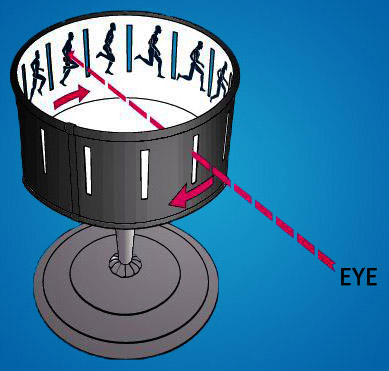
The zeotrope concept was suggested in 1834 by William George Horner, and from the 1860s marketed as the zoetrope. It operates on the same principle as the phenakistoscope. It was a cylindrical spinning device with several frames of animation printed on a paper strip placed around the interior circumference. The observer looks through vertical slits around the sides to view the moving images on the opposite side as the cylinder spins.


Zeotrope.


 The first known animated projection on a screen was created in France by Charles-Émile Reynaud, who was a French science teacher. Reynaud created the Praxinoscope in 1877 and the Théâtre Optique in December 1888. On 28 October 1892, he projected the first animation in public, Pauvre Pierrot, at the Musée Grévin in Paris. This film is also notable as the first known instance of film perforations being used. His films were not photographed, but drawn directly onto the transparent strip. In 1900, more than 500,000 people attended these screenings.

  Praxinoscope.

BALL

This a animation of a ball that we have been tasked to do as a mini project. We created it in photoshop, and as you can see its not half bad.

 Techniques of animation:
Computer animation
Using the computer to animate. We have learnt 2D animation techniques using Photoshop. The assets are created that are to be animated. They are imported or placed in to the programme. We use the Timeline for setting keyframes. The current time indicator is then postioned at a specified time or frame and the asset is moved. This creates another keyframe. When the animation is played the assets move.
When all the animation is finished you can export the file as a MP4 (or other format) to distribute. The example above is an MP4 file.

Rotoscoping 
Rotoscoping is where live actors are filmed and the animation is then created using them as a template. In traditional animation production, the filmed images are traced by hand onto a separate roll of celluloid film. This technique makes the movement of characters more realistic and was used in Walt Disney’sSnow White and the Seven Dwarf (1937).
https://www.pearsonschoolsandfecolleges.co.uk/Secondary/ICT/BTEC/BTECLevel2FirstIT/Resources/Additionalmaterialforusers/Unit30AnimationTechniques.pdf
We had the experience of creating an animation of a gorilla using the rotoscoping technique. We were given a file and then set up an new layer above the existing video to draw over. We also did this in Photoshop.